An "Execution Definition" is made up of two things a "Credential" and a "Script" and without either of those a Definition cannot be created for execution
This step by step guide will show how to use a "Credential" and a "Script" to create a new "Execution Definition"
Note: it doesn't matter the order in which a "Script" or "Credential" are previously created
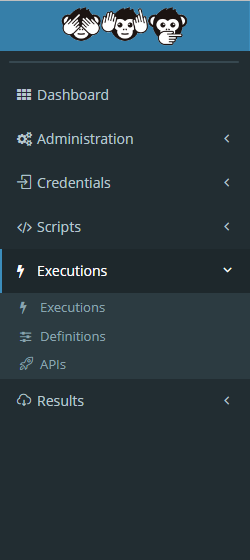
From the navigation menu on the left, click on "Executions". This displays a sub-menu of three options
Clicking either of the three options available, will take you to each corresponding "Executions" section
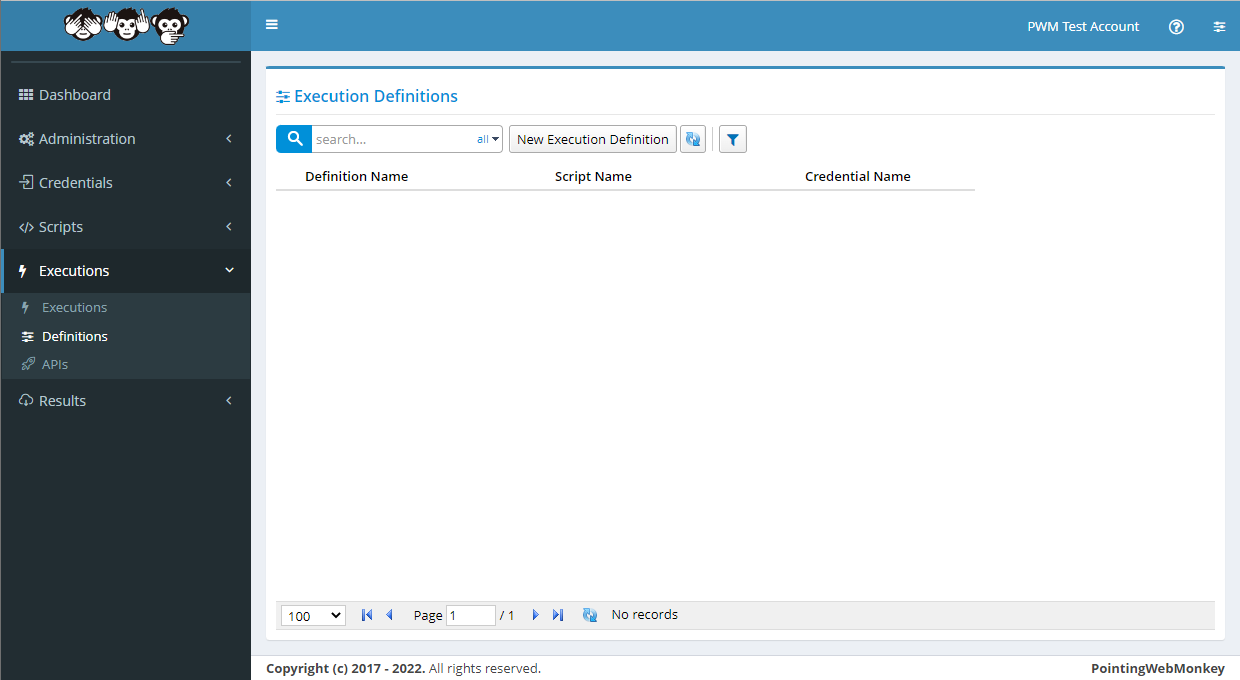
(if you have no Definitions, you will need to start by creating a "Definition")
Definitions - Adding a new Execution Definition To make a new Definition click on the "New Execution Definition" button
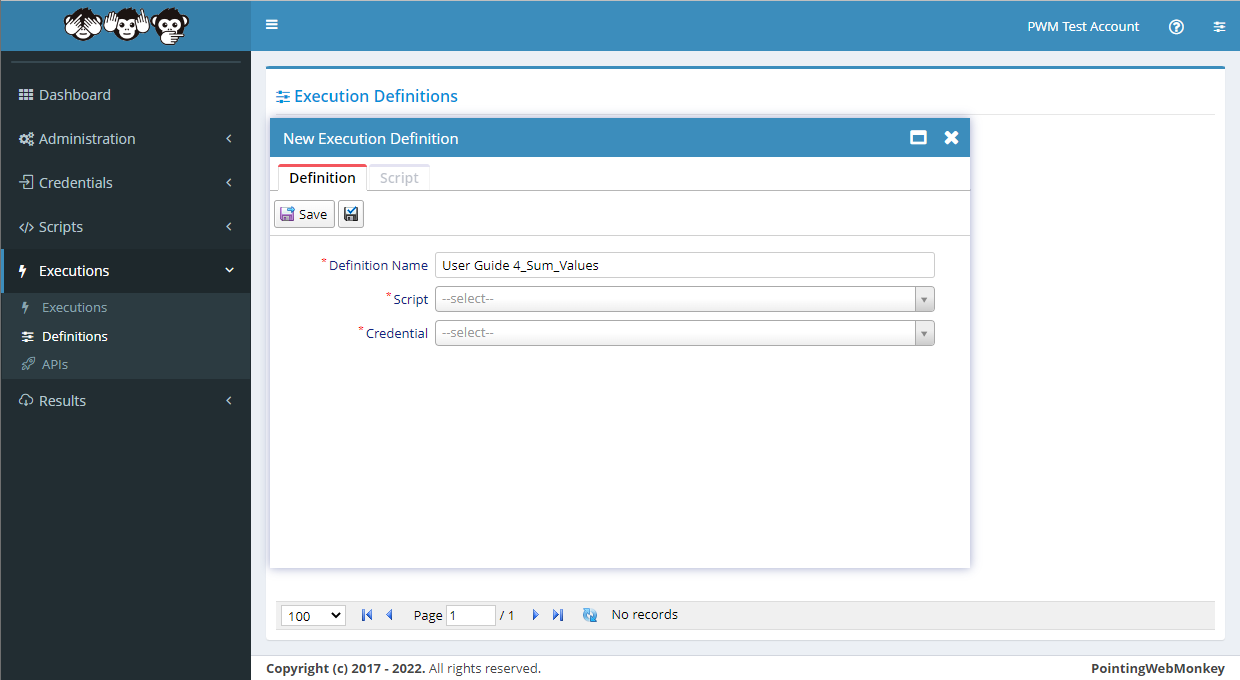
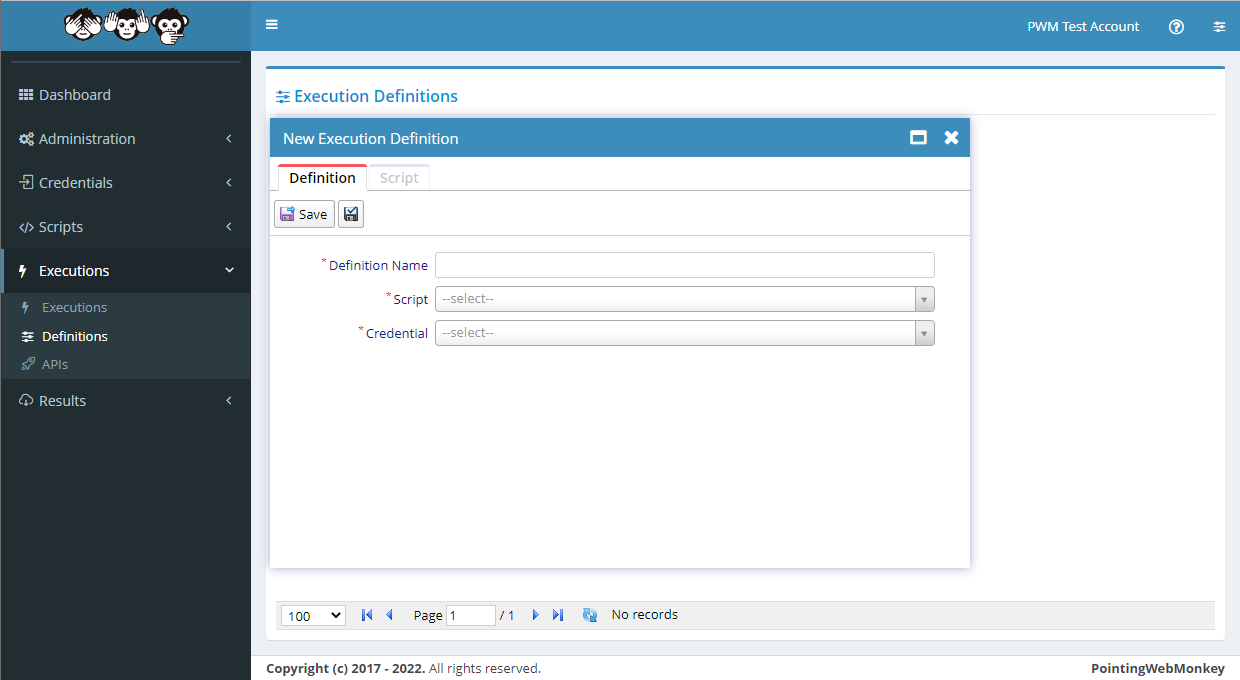
After clicking the button the "New Execution Definition" window will appear with
a textbox for a "Definition Name"
a drop-down for a "Script"
a drop-down for a "Credential"
In the "Definition Name" textbox enter a 'Name for the Definition' that is easy to recognize, but is also easy to distinguish from other "Definitions"
In this example we entered "User Guide 4_Sum_Values"
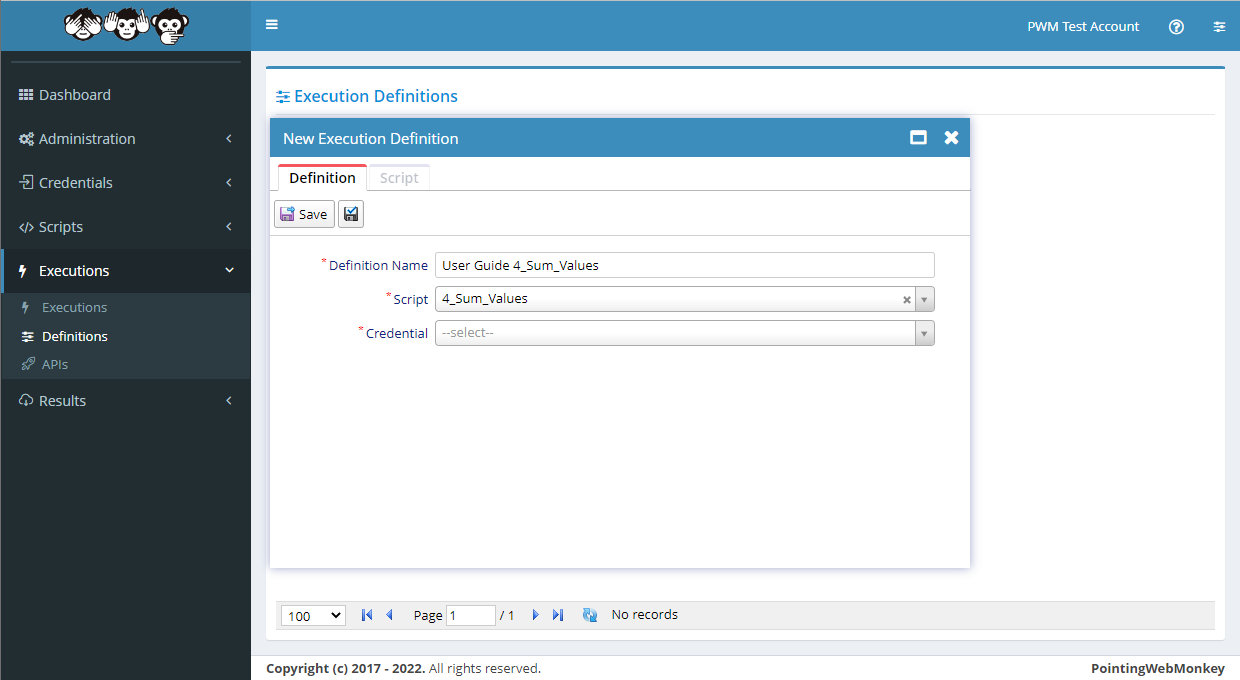
Select a Script from the list available in the drop-down menu
In this example we selected "4_Sum_Values"
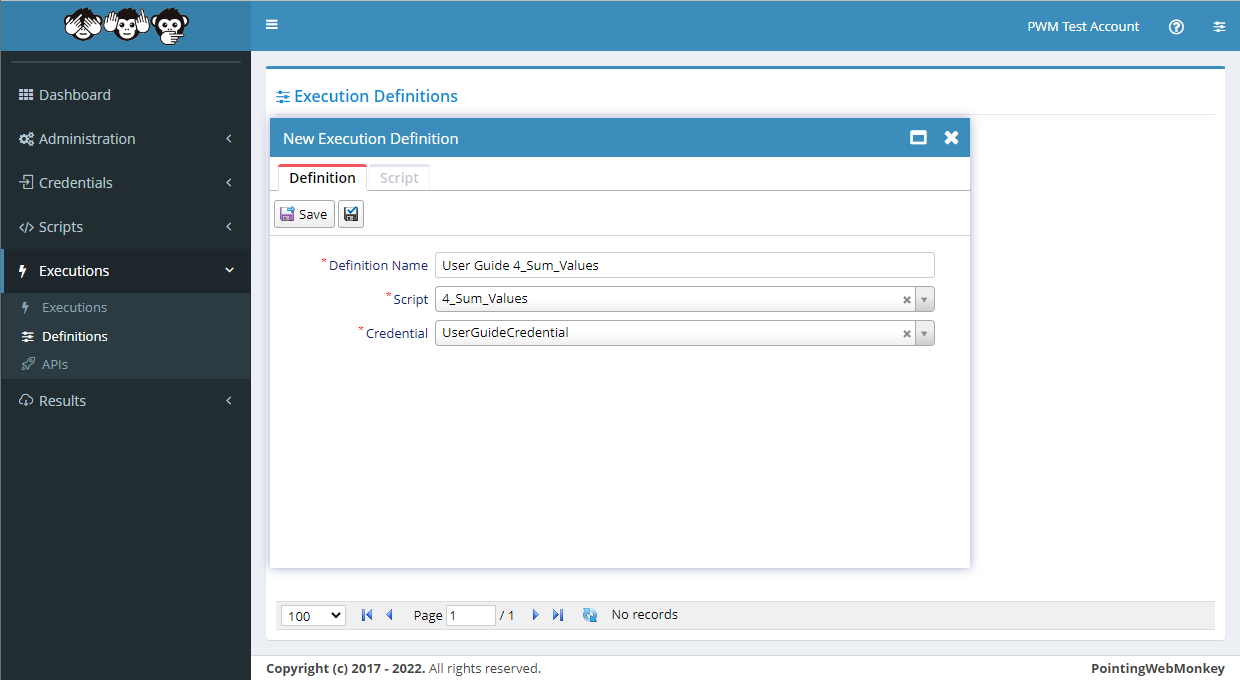
Select a Credential from the list available in the drop-down menu
In this example we selected "UserGuideCredential"
Once each of the fields have been filled, click the "Save" button
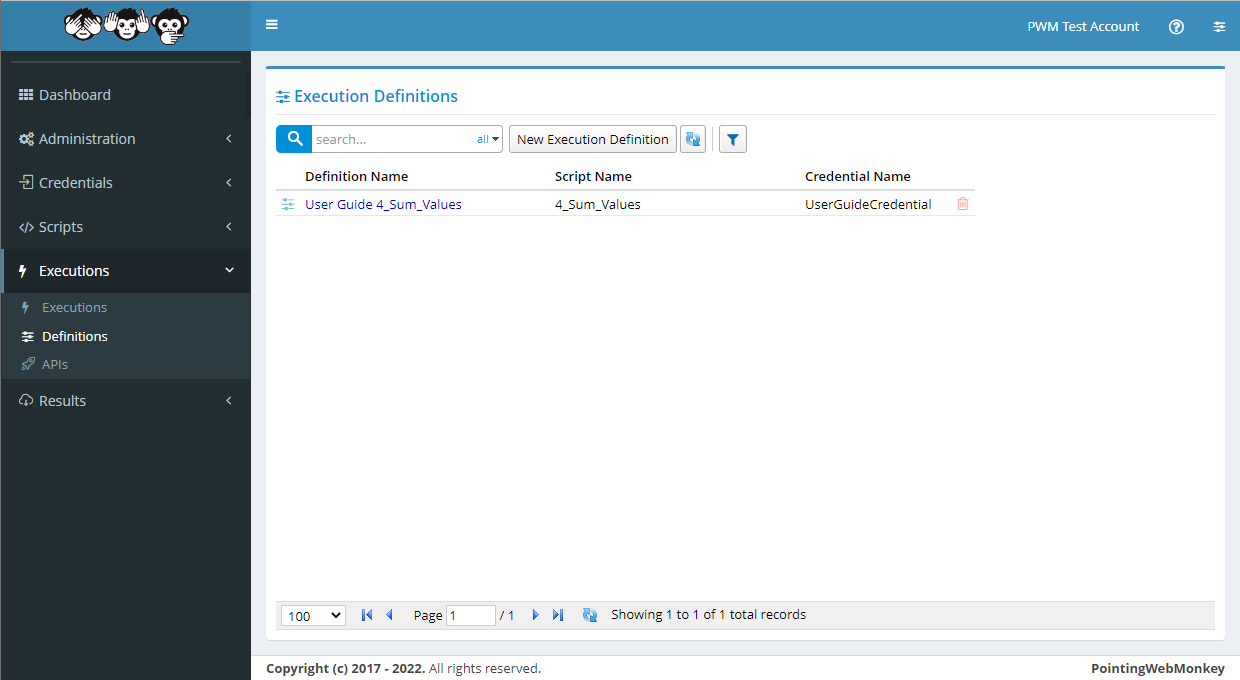
Once saved it will appear in the "Definitions" list under the "Definitions Name" entered
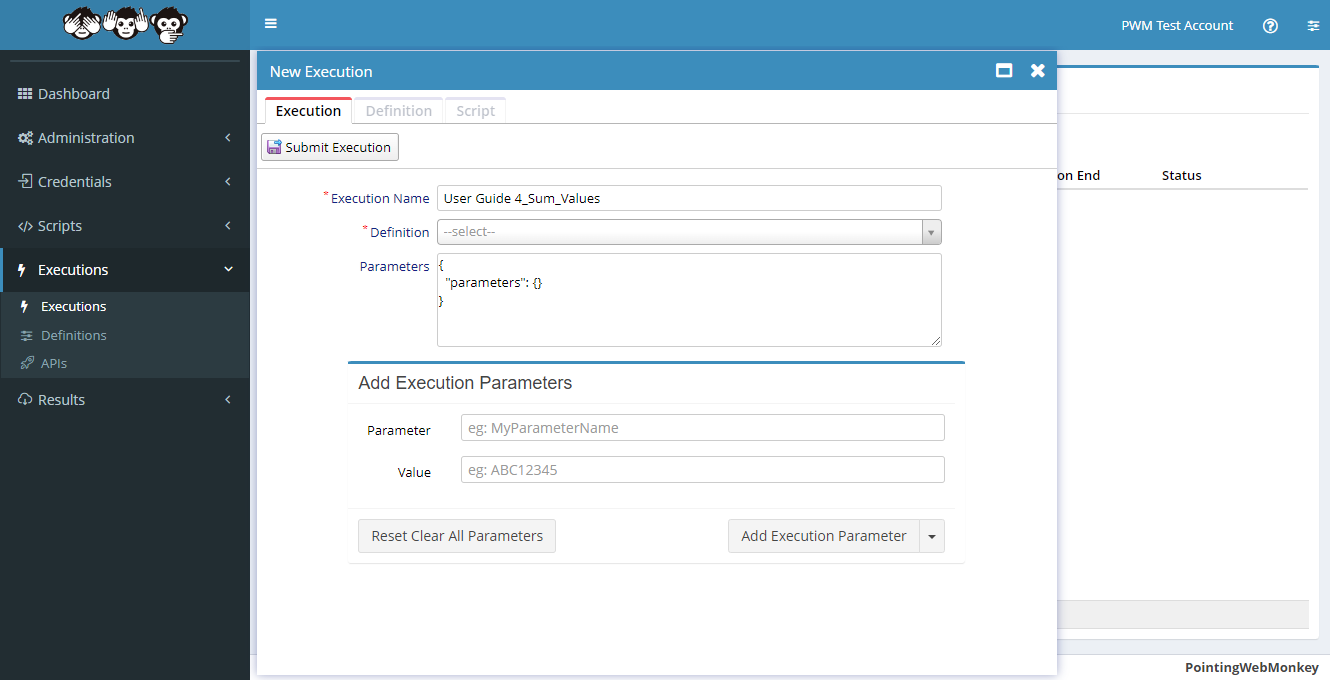
Executions - Submitting a new ExecutionTo submit a new Execution click on the "New Execution" button
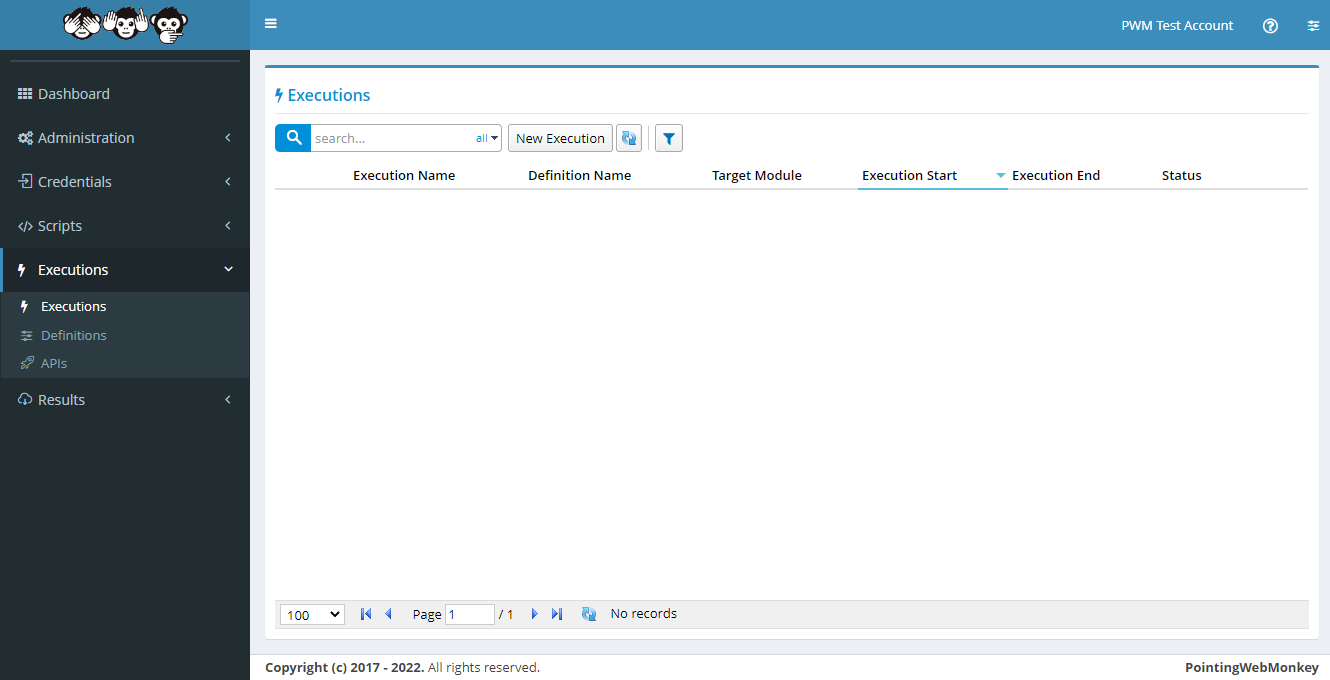
After clicking the "New Execution" button, the "New Execution" window will appear with
a textbox for a "Execution Name"
a drop-down for a "Definition"
a textarea for a "Parameters"
(the combination of these make a "New Execution")
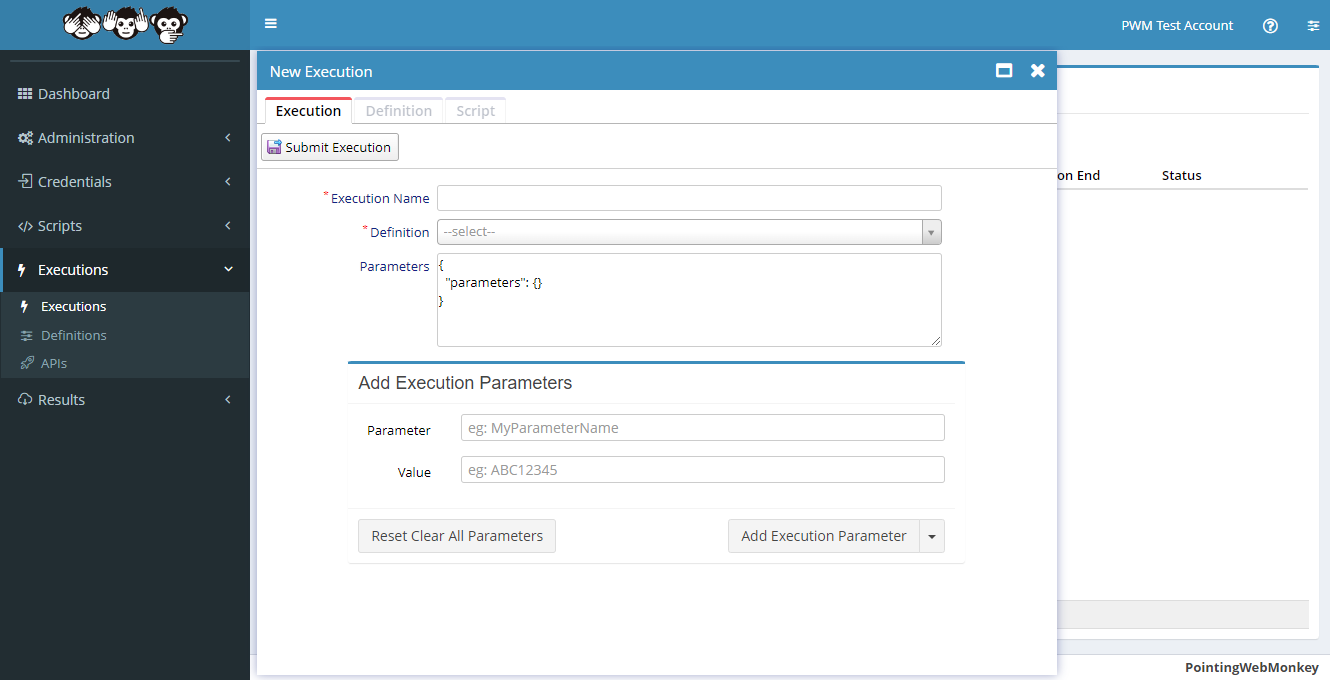
In the "Execution Name" textbox enter a 'Name for the Execution' that is easy to recognize, but is also
easy to distinguish from other "Executions"In this example we entered "User Guide 4_Sum_Values"
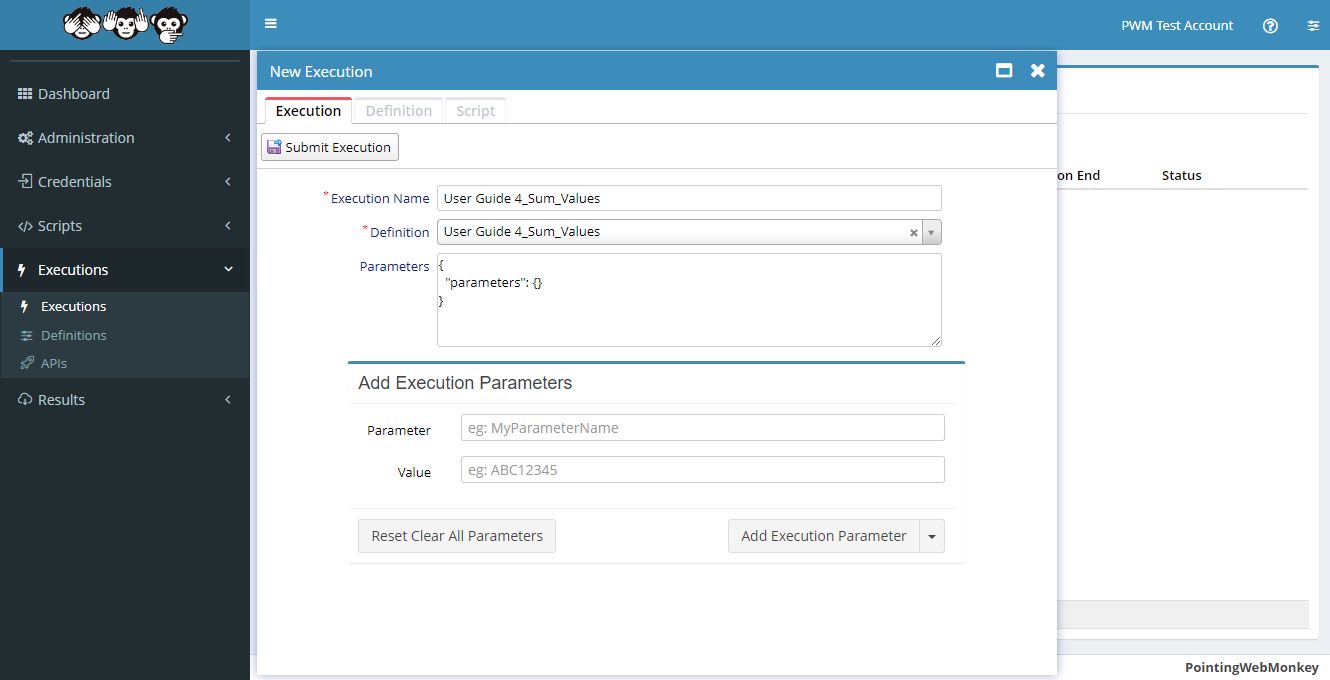
Select a Definition from the list available in the drop-down menu
In this example we selected "User Guide 4_Sum_Values"
Note: the "4_Sum_Values Script" does not require any Execution Parameters)
Once each of the fields have been filled, click the "Submit Execution" button
Once submitted it will appear in the "Executions" list under the "Execution Name" entered,
with the "Status" shown as "Queued"
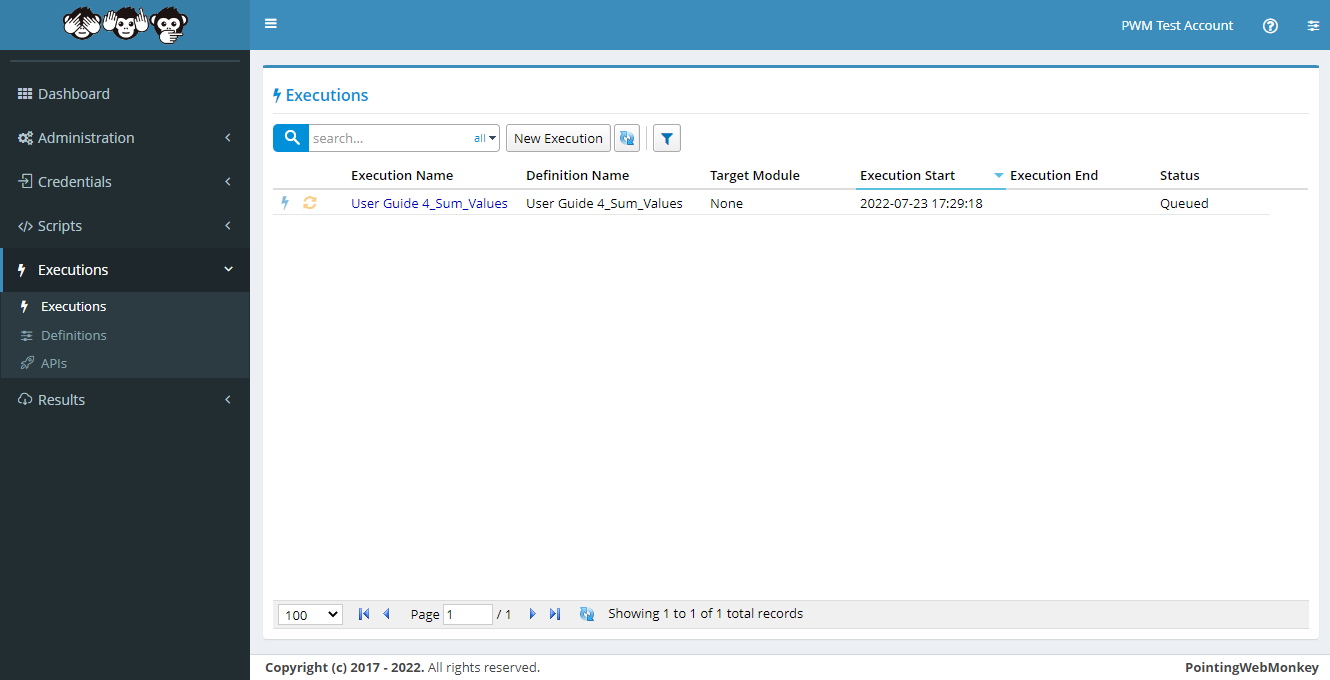
When the execution process begins the "Status" will change to "Processing"
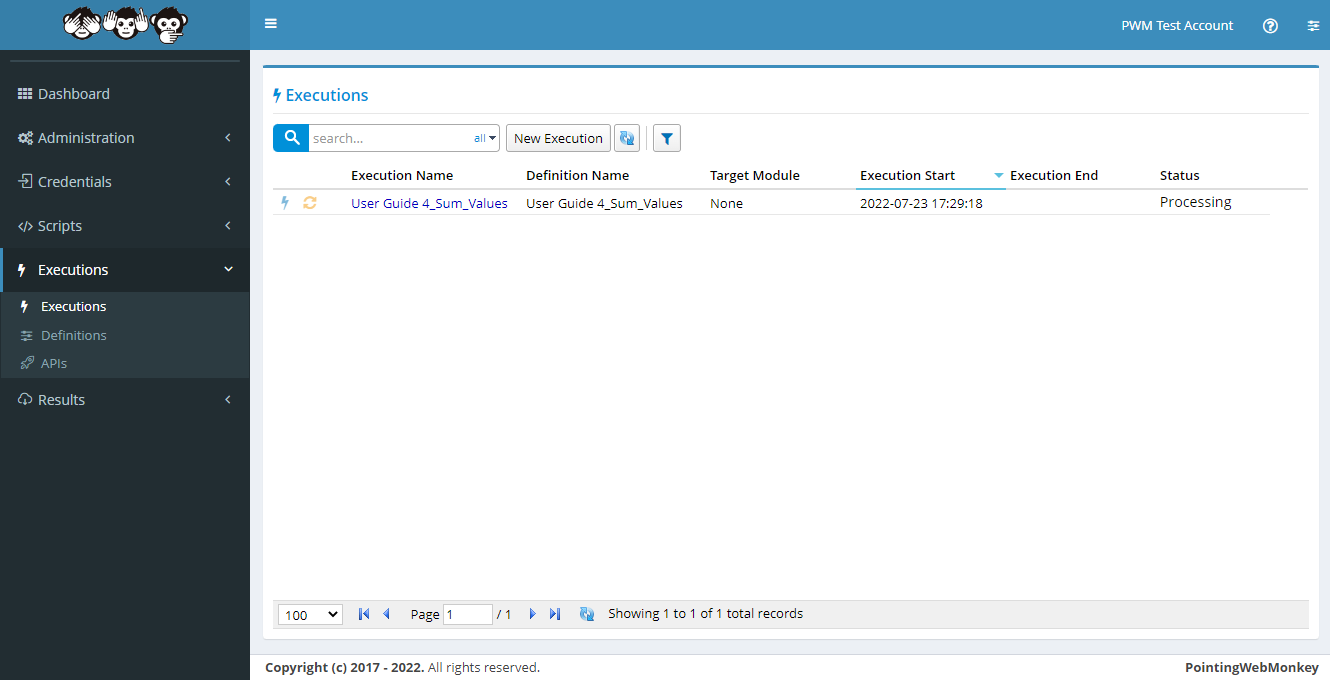
Once the execution process has run the "Status" will be changed to "Completed"
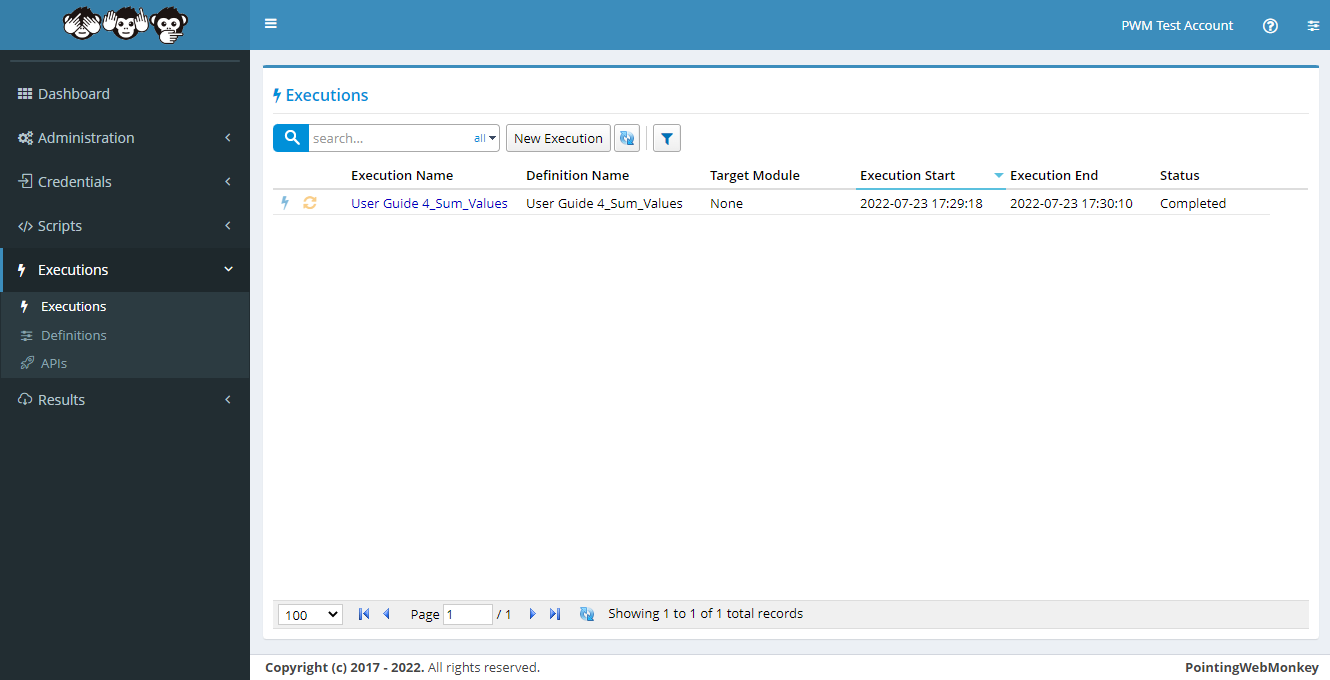
To view the results of your execution see our Results User Guide
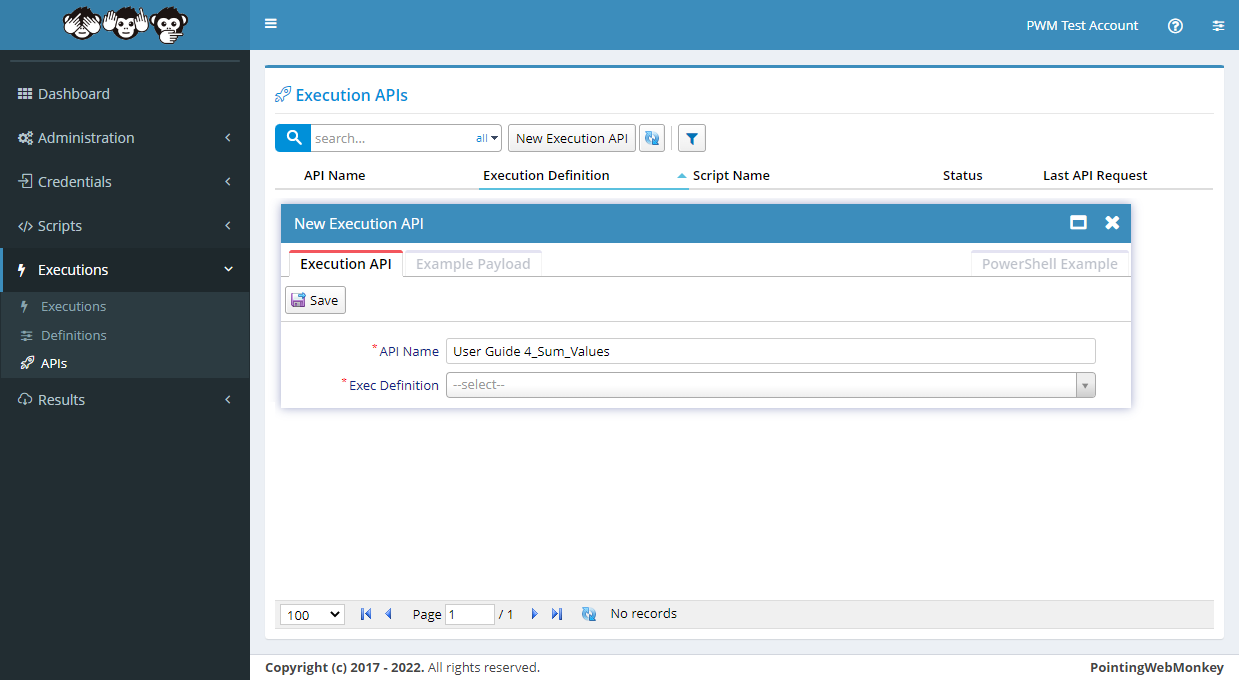
APIs - Adding a new Execution APITo make a new Execution API click on the "New Execution API" button
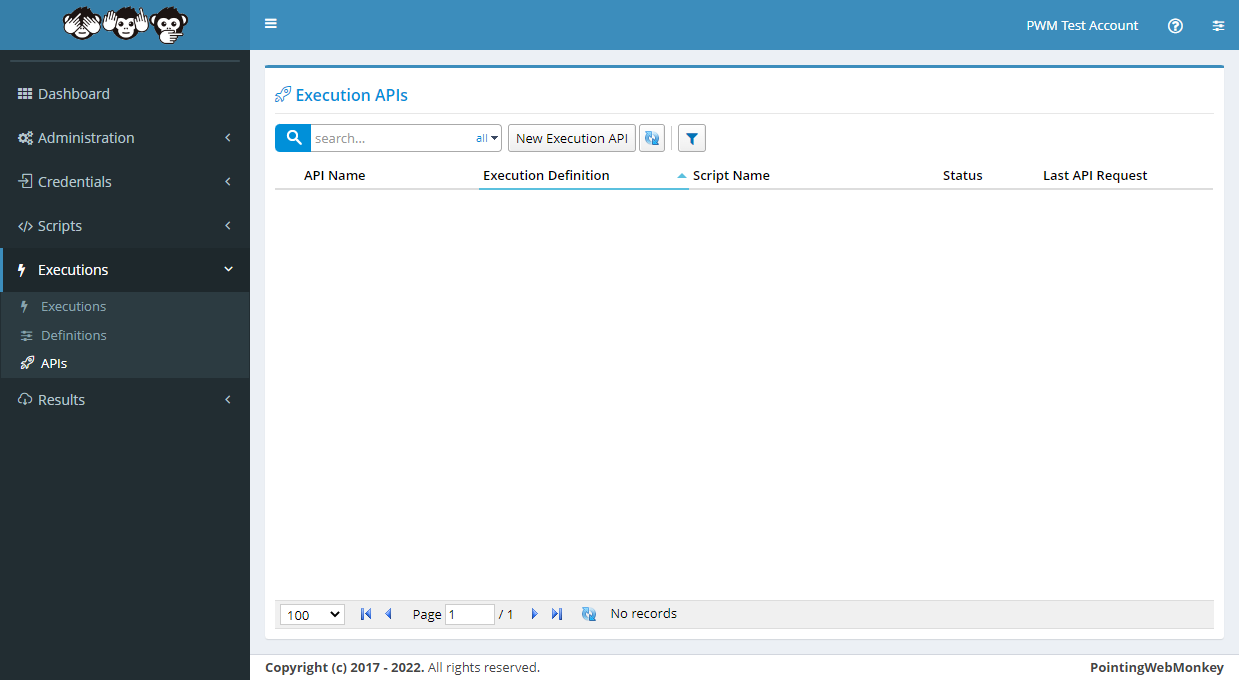
After clicking the "New Execution API" button, the "New Execution API" window will appear with
a textbox for a "API Name"
a drop-down for a "Execution Definition"
(the combination of these make a "New Execution API")
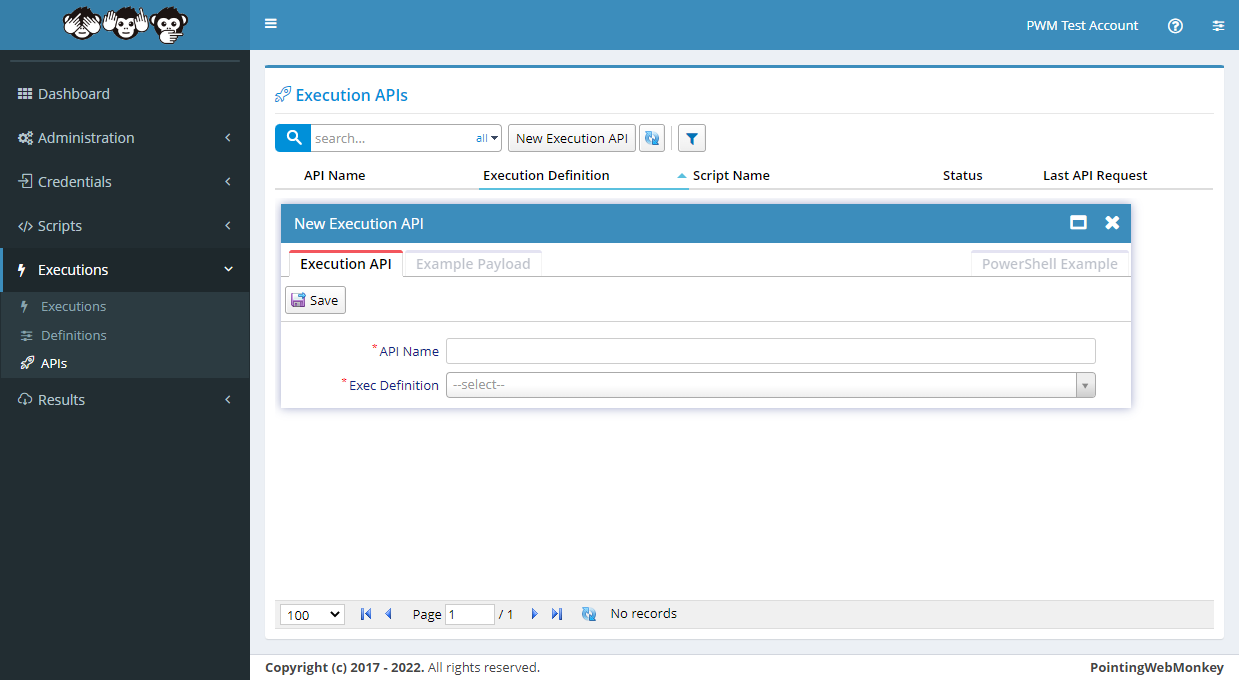
In the "API Name" textbox enter a 'Name for the API' that is easy to recognize, but is also
easy to distinguish from other "APIs"In this example we selected "User Guide 4_Sum_Values"
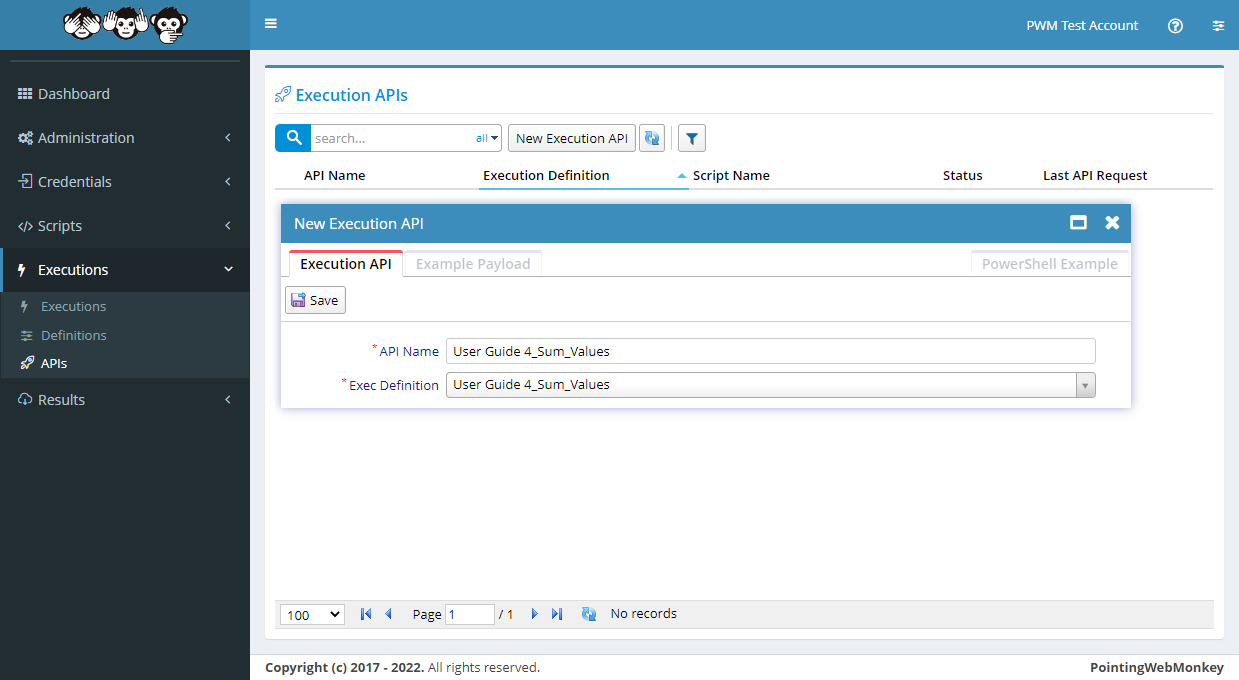
Select a Definition from the list available in the drop-down menu
In this example we selected "User Guide 4_Sum_Values"
Note: the "4_Sum_Values Script" does not require any Execution Parameters)
Once each of the fields have been filled, click the "Save" button
Once saved it will appear in the "APIs" list under the "API Name" entered
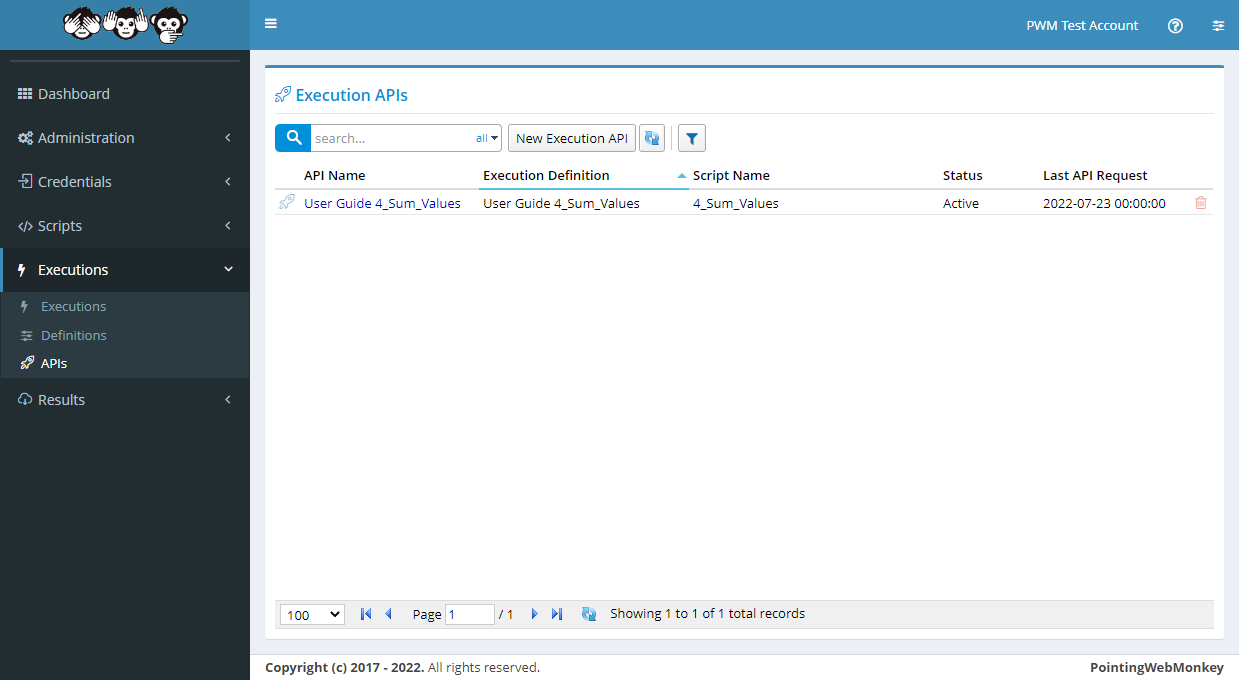
To view the new "Execution API" click on the "API Name"
The "Update Execution API" window will appear with
a textbox showing the "API Name"
a textbox showing the "Execution Definition"
a textbox showing the "API Identifier"
a textbox showing the "API Key"
a textbox showing the "API Status"
a textbox showing the "Last API Request"
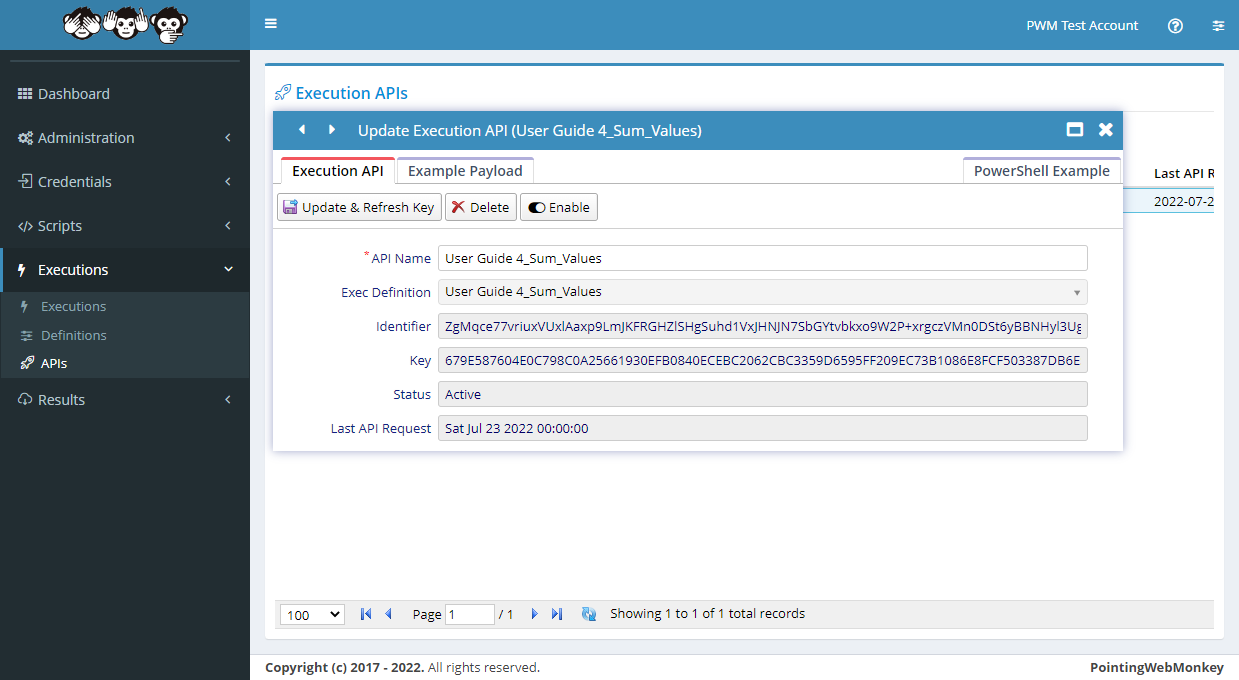
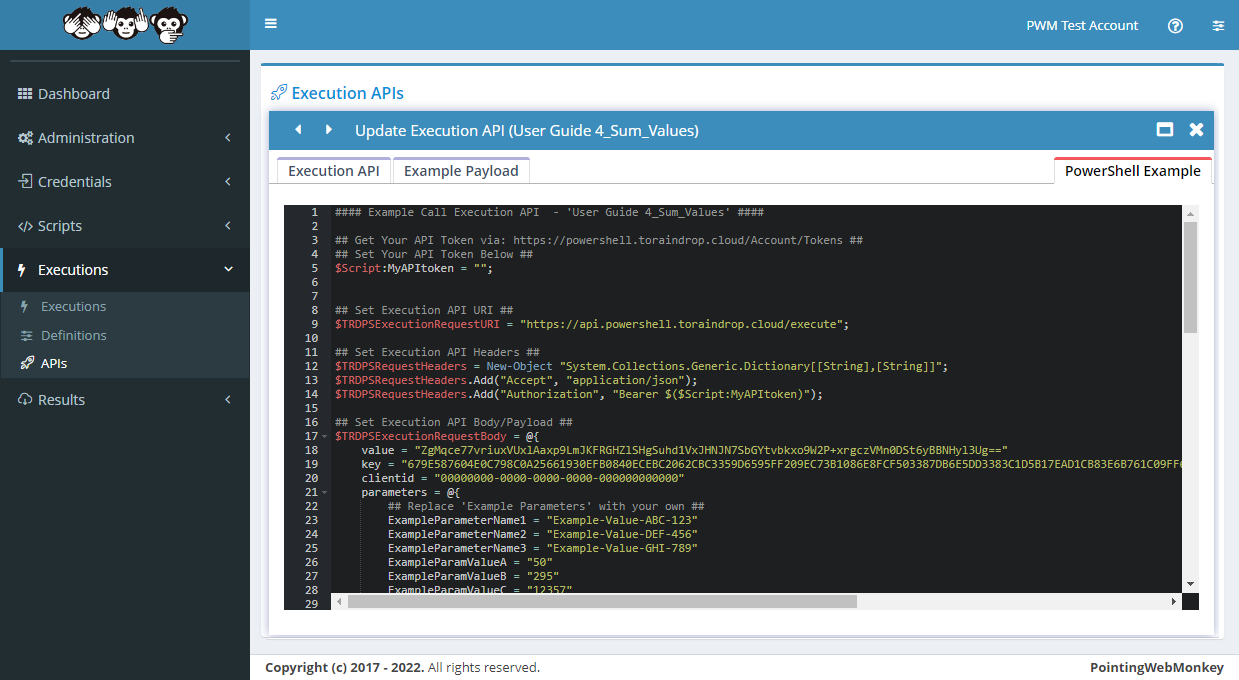
Clicking the "PowerShell Example" tab, will display example PowerShell code for accessing the "Execution API"